

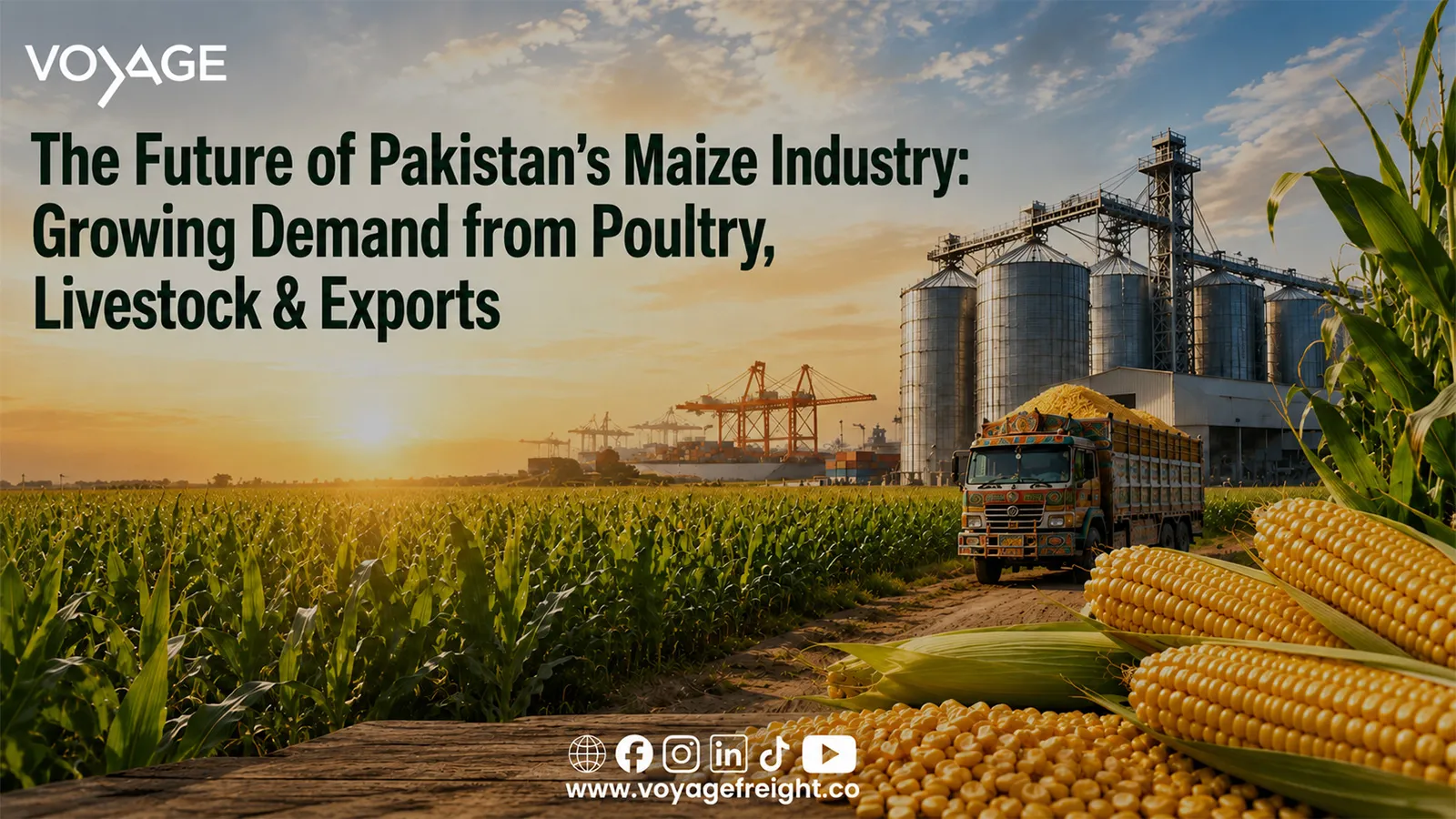
The Future of Pakistan’s Maize Industry: Growing Demand from Poultry, Livestock & Exports
Introduction
Pakistan’s maize industry has changed significantly over the last few years. Once considered a
secondary crop, maize has now become one of the country’s most valuable agricultural products.
Higher-yield hybrid seeds, better farming practices & growing industrial demand have all contributed to this progress. Today, maize is no longer just food; it’s an essential raw material for poultry feed, livestock nutrition & food processing. As demand continues to rise, Pakistan has a great opportunity to strengthen both its local market and export potential.
The Future of Pakistan’s Maize Industry
One of the biggest reasons behind maize’s success is the rapid growth of Pakistan’s poultry sector. According to the Pakistan Agricultural Research Council (PARC), nearly 70% of the country’s maize production is used in poultry feed, while around 20% goes to the wet milling industry & the remaining 10% is used for food & seed purposes. This clearly shows how important maize has become for Pakistan’s food supply chain.
The livestock sector is also creating new opportunities. As dairy & meat production continues to expand, farmers require high-quality feed to improve animal health & productivity. Maize provides the energy needed in balanced feed, making it a preferred choice for livestock producers. With Pakistan’s livestock industry growing steadily, maize demand is expected to increase even further.
On the production side, Pakistan has made remarkable progress. PARC reports that the country produces around 6.3 million tons of maize annually, with Punjab and Khyber Pakhtunkhwa contributing almost all of the national output. The use of hybrid seed varieties has helped improve yields, giving farmers better returns from the same amount of land.
Export opportunities are another positive sign for the future. While Pakistan already exports maize to several international markets, improving grain quality, storage facilities & logistics can help increase export volumes. Reliable trade data published by the Pakistan Bureau of Statistics highlights the importance of agricultural exports in supporting the country’s economy & expanding global trade opportunities.
However, there is still room for improvement. Better post-harvest handling, modern storage systems, digital grain trading & stronger links between farmers & buyers can reduce losses & increase profitability. Investments in these areas will help Pakistan compete more effectively in international markets while ensuring consistent supply for domestic industries.
Conclusion
The future of Pakistan’s maize industry looks bright. Rising demand from poultry, livestock & export markets is creating new opportunities for farmers, traders & agribusinesses. By investing in better farming techniques, efficient storage, transparent trading & modern supply chains, Pakistan can strengthen its position as a leading maize producer in the region. With the right support & innovation, maize will continue to play a key role in the country’s agricultural growth & economic development.