

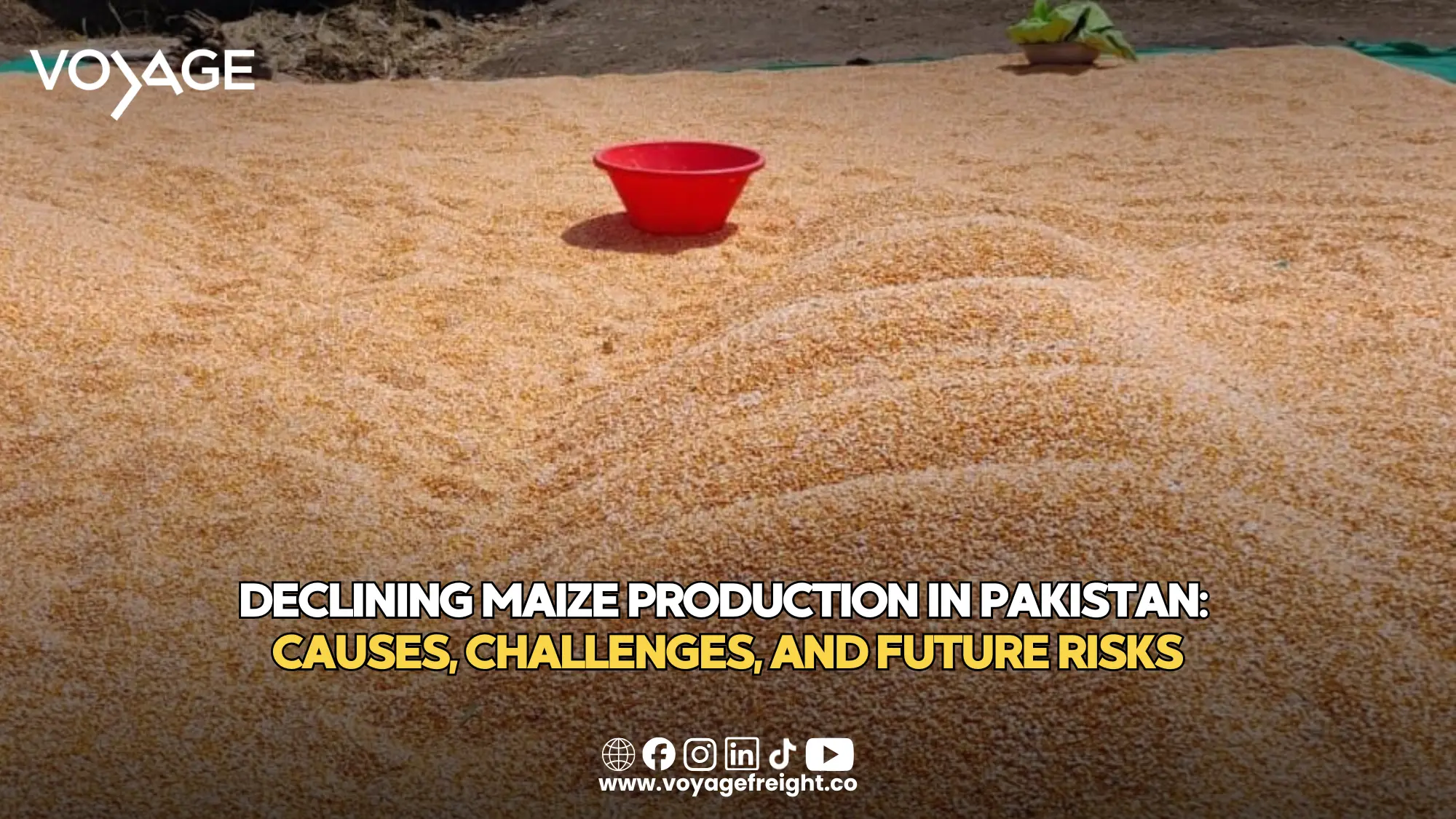
Declining Maize Production in Pakistan: Causes, Challenges, and Future Risks
Declining Maize Production in Pakistan: Causes, Challenges, and Future Risks
Maize plays a crucial role in Pakistan’s agricultural and economic system, yet its production has been showing worrying signs of decline. As the third most important cereal crop after wheat and rice, maize supports not only food supply but also the poultry and livestock sectors. When maize production drops, the effects ripple through the economy—raising food prices, increasing production costs for farmers, and putting pressure on food security.
Major Causes of Declining Maize Production
One of the biggest reasons behind declining maize production is climate change. Farmers are increasingly facing unpredictable weather patterns, including irregular rainfall and prolonged heatwaves. Maize is a sensitive crop that requires specific temperature and moisture conditions, and even slight variations can significantly reduce yields. Rising temperatures, especially during critical growth stages, can damage crop development and lower productivity.
Another major issue is water scarcity. Pakistan already struggles with limited water resources, and agriculture consumes a large portion of available water. In many maize-growing regions, farmers rely on irrigation systems that are either outdated or inefficient. As water availability becomes more uncertain, maintaining consistent maize production becomes increasingly difficult.
Soil degradation is also contributing to the problem. Years of intensive farming without proper soil management have led to nutrient depletion. Farmers often use fertilizers, but improper application and rising costs mean that soils are not being replenished effectively. Over time, this reduces the land’s ability to produce healthy crops.
Economic and Policy-Related Challenges
Economic challenges further complicate the situation. The cost of inputs such as hybrid seeds, fertilizers, and fuel has increased sharply. For small-scale farmers, these rising expenses make maize cultivation less profitable. At the same time, limited government support—compared to crops like wheat—leaves maize farmers more vulnerable to market fluctuations and financial risk.
Technological and Knowledge Gaps
There are also technological and knowledge gaps. Many farmers still lack access to modern farming techniques, high-quality seeds, and proper extension services. Without the right tools and information, improving yields becomes difficult. In addition, pests and diseases continue to cause crop losses, especially when farmers cannot afford effective control measures.
The decline in maize production has serious implications for the future. It threatens food security, particularly in the poultry sector, where maize is a key feed ingredient. Lower production can lead to higher prices for meat and eggs, affecting millions of consumers. It also impacts rural livelihoods, as farmers face reduced incomes and increased uncertainty.
Addressing this issue requires a multi-dimensional approach. Improving irrigation systems, promoting climate-resilient farming practices, and ensuring access to quality seeds can help boost production. Government policies should also provide better support to maize farmers through subsidies, training programs, and market stability.
Conclusion
In the long run, the future of maize production in Pakistan depends on how effectively these challenges are managed. Without timely action, the decline could deepen, affecting not just agriculture but the broader economy as well.