

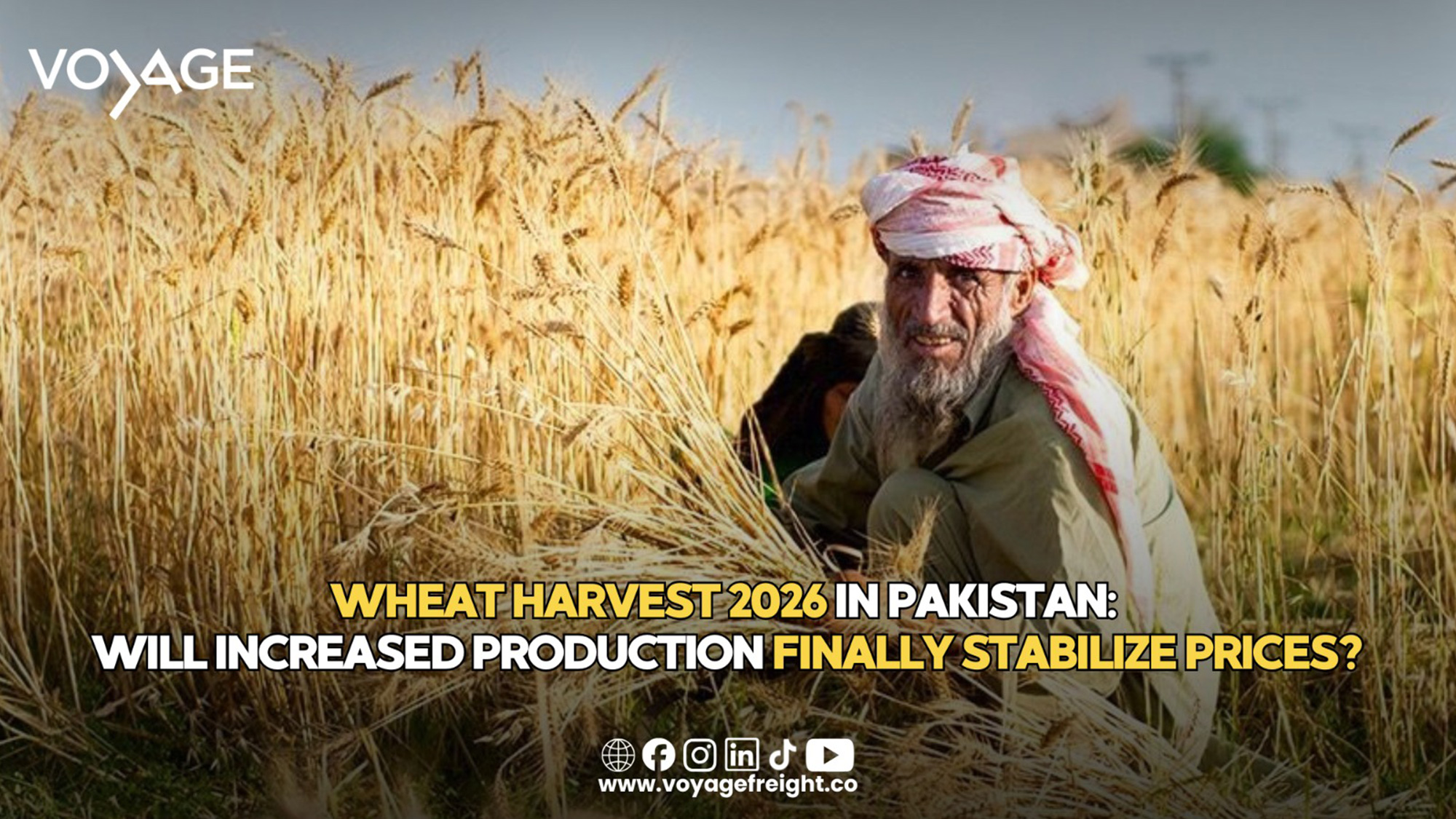
Wheat Harvest 2026 in Pakistan: Will Increased Production Finally Stabilize Prices?
Every year, millions of Pakistanis ask the same question when April arrives — will bread be affordable this season? The answer lies in the fields of Punjab and Sindh, where the fate of the nation’s most important crop is decided. The Wheat Harvest Pakistan 2026 season is now underway, and farmers, consumers, and policymakers are all watching closely.
A Crop That Feeds a Nation
Wheat is not just a grain in Pakistan. It is the backbone of daily life. From the roti on the table of a daily wage worker in Lahore to the naan served in a Karachi restaurant, everything depends on how well the wheat crop performs each year. Pakistan is one of the top wheat-producing countries in the world, and the wheat crop is grown on nearly 9 million hectares of land — about 40 percent of all field crop land in the country.
The harvesting season typically begins in March in Sindh and extends through May in Punjab. This year, all eyes are on whether the Wheat Harvest Pakistan season can bring enough grain to meet the country’s rising demand.
What the Numbers Say About 2026
The picture painted by recent agricultural reports is mixed. In the 2024/25 season, Pakistan achieved a record output of around 31.6 million metric tons. That was a landmark moment. However, the 2025/26 growing season brought serious challenges.
According to forecasts from the USDA’s Foreign Agricultural Service, wheat production Pakistan for the current season is expected to fall to approximately 27.5 to 28.9 million metric tons. That is a drop of around 10 to 13 percent compared to the previous record harvest. The main reasons behind this decline are a 7 percent reduction in cultivated area and extremely dry weather throughout the growing season.
Rainfall during the wheat growing months was well below average — in some estimates, nearly 39 percent lower than normal. Temperatures were also significantly above average, which hurt grain-filling at a critical stage of crop growth. Studies suggest that even a one-degree rise above the ideal temperature during grain filling can reduce yield by five to seven percent. This year, farmers in central Punjab and upper Sindh experienced exactly that kind of damaging heat.
Why Farmers Reduced Their Sowing Area
One of the biggest concerns this season is that farmers chose to plant wheat on less land than before. This was not a random decision. For the first time in many years, the government failed to announce a clear wheat support price before the sowing season started in October 2024. Farmers depend on that price signal. Without it, many decided the risk was too high.
The government’s move toward market deregulation — partly driven by IMF reform requirements — removed the traditional safety net for growers. When the guaranteed procurement system was weakened, and flour mills were left to buy freely from the open market, it created confusion. The result was that small farmers in particular felt exposed. Some shifted to other crops. Others simply sowed less wheat.
This policy uncertainty is a key reason why the wheat crisis in Pakistan has continued even after a record harvest year. A bumper crop does not automatically fix a broken policy structure.
The Price of Wheat in Pakistan Right Now
So what is the price of wheat in Pakistan in 2026? As of April 2026, the open market wheat price in Pakistan ranges between Rs. 3,700 and Rs. 4,650 per 40 kg bag, depending on the city and quality. The government’s official support price for Punjab has been set at Rs. 3,500 per 40 kg for this procurement season.
In Sindh and Balochistan, prices tend to be slightly higher due to lower local production and transportation costs. Meanwhile, wheat flour (atta) prices in retail markets range between Rs. 4,500 and Rs. 5,837 for a 50 kg pack.
These numbers are hard on ordinary households. A large portion of Pakistan’s population spends a significant chunk of their income on flour. When the price of wheat in Pakistan rises, it does not just affect food bills — it affects everything from school budgets to small business costs.
The Import Question
With domestic wheat production Pakistan falling short of the country’s consumption needs — estimated at around 31.9 million metric tons for 2025/26 — the gap has to come from somewhere. Imports appear to be the answer, with forecasts suggesting Pakistan may need to import up to 1.7 million metric tons during this marketing year.
However, as of early 2025, the government maintained a ban on wheat imports that had been in place since July 2024. That ban was introduced after large imports in the previous cycle caused a domestic surplus and hurt farmer incomes. Lifting the ban requires a careful balancing act. Import too soon, and domestic farmers suffer. Import too late, and consumers face shortages and higher flour prices.
Negotiations were reportedly underway with countries like Russia and Kazakhstan for government-to-government wheat procurement deals at lower-than-market rates. Whether these come through on time will play a major role in how the wheat crisis in Pakistan resolves through the rest of 2026.
Water: A Growing Concern
Beyond weather and policy, there is a deeper problem threatening Pakistan’s long-term agricultural health — water. Pakistan’s two major reservoirs, Tarbela and Mangla, were running at critically low levels during the 2024/25 growing season. In some reports, both were at or near dead levels, meaning water could not flow out naturally.
For Punjab and Sindh, which rely heavily on canal irrigation for their wheat crop, this is alarming. Water demand has grown significantly since the 1970s, while storage capacity has reportedly dropped by about one-third due to siltation. If this problem is not addressed, future Wheat Harvest Pakistan seasons could face even greater production shortfalls regardless of weather or policy improvements.
Can Prices Stabilize?
The question everyone is asking — will the wheat price in Pakistan finally come down and stay stable? The answer depends on several things happening at the same time.
First, a smooth procurement campaign this season is essential. If the government buys enough grain at fair prices and stores it well, it can release stocks to stabilize the market during the lean months. Second, timely imports — if needed — must be authorized without delay. Third, the government needs to restore farmer confidence by giving clear price signals before the next sowing season begins.
The Punjab Food Department has reportedly been supplying wheat to flour mills at subsidized rates to help control atta prices. Subsidies through the Benazir Income Support Program (BISP) are also being considered to protect lower-income households. These are positive steps, but short-term relief does not replace long-term agricultural planning.
What Lies Ahead
The 2026 Wheat Harvest Pakistan season is a reminder of how fragile food security can be when policy, weather, and water problems collide at the same time. Pakistan has shown it can produce record amounts of wheat when conditions are right. The 2024/25 season proved that.
But sustaining that performance requires more than good rainfall. It needs consistent government support, reliable irrigation, a fair price for farmers, and smart market regulation that protects both growers and consumers.
Until those foundations are solidly in place, the wheat price in Pakistan will continue to rise and fall in unpredictable ways — and ordinary Pakistanis will keep asking whether their daily roti will cost more tomorrow than it did today.