

Warehousing & Logistics Gap in Pakistan: A Growing Challenge and Opportunity for Agriculture
Introduction
Pakistan’s agriculture sector, particularly wheat and maize, plays a vital role in ensuring food security and economic stability. However, a growing warehousing and logistics gap is creating serious inefficiencies across the supply chain. From post-harvest losses to overstocking issues, the lack of modern infrastructure is impacting both farmers and the broader economy.
Structural Challenges in the System
1. Poor Storage and Post-Harvest Losses
One of the biggest issues in Pakistan’s agricultural sector is the lack of proper storage facilities. Traditional storage methods expose grains to moisture, pests, and environmental damage. As a result, a significant portion of harvested wheat and maize is lost every year. These post-harvest losses reduce farmers’ profits and increase food insecurity.
2. Overstocking and Government Pressure
Another major concern is overstocking. Government agencies often procure large quantities of wheat, leading to storage shortages. This forces authorities to sell excess stock at lower prices, disrupting market stability. Inefficient storage planning worsens the overall agri supply chain optimization challenge.
3. Lack of Modern Silos and Cold Chains
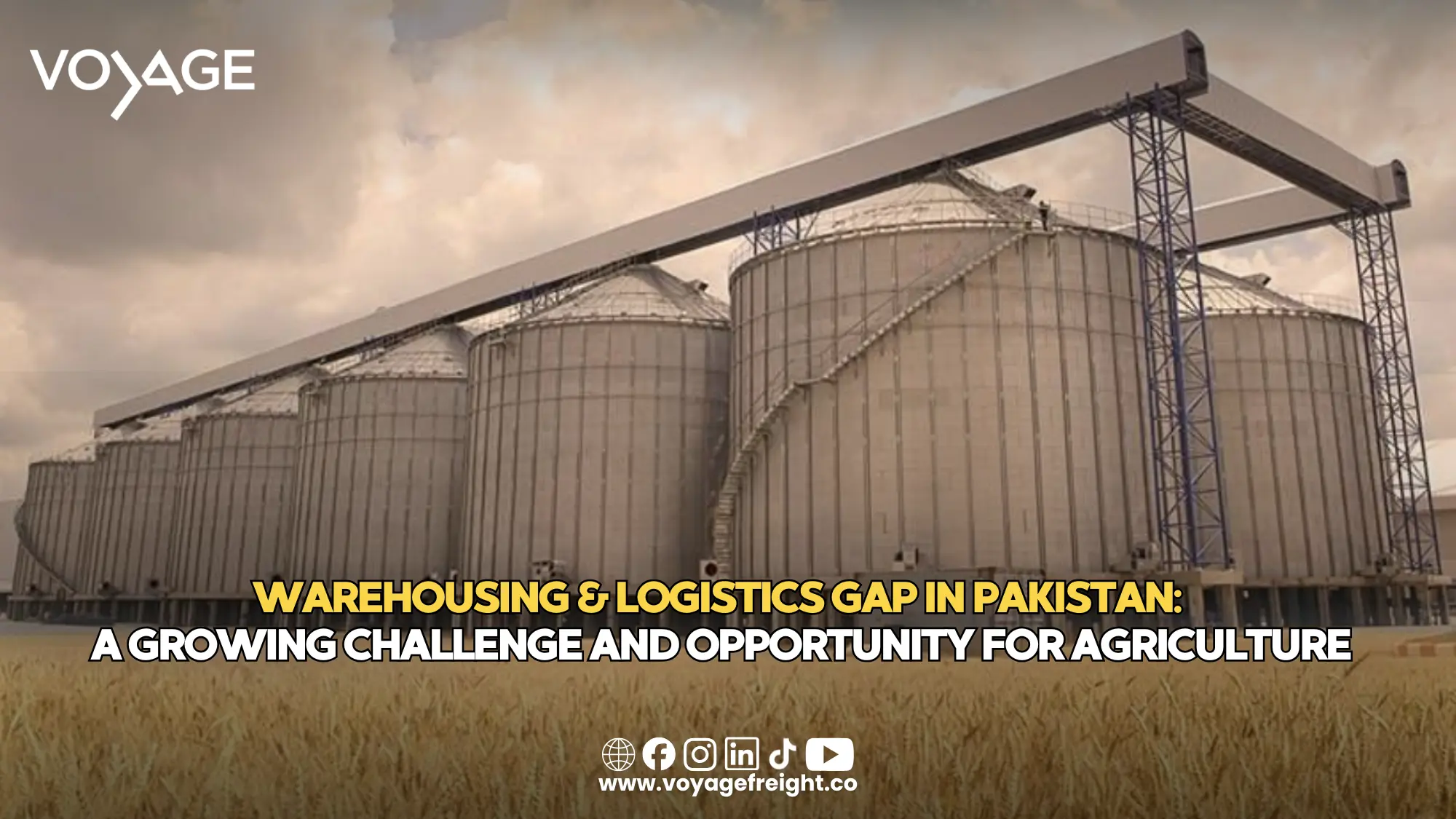
Pakistan still relies heavily on outdated storage systems. The absence of modern silos and cold chain infrastructure limits the ability to preserve grain quality over time. Without investment in grain storage solutions, the country struggles to compete in global agricultural markets.
4. Weak Coordination Between Authorities
Poor coordination between federal and provincial governments further complicates logistics. Misaligned policies and delayed decision-making create bottlenecks in transportation, storage allocation, and distribution. This directly affects the efficiency of the logistics gap in Pakistan.
Emerging Opportunities in the Sector
Despite these challenges, the current situation presents significant growth opportunities for businesses and investors.
1. Digital Warehousing Platforms
The rise of technology is opening doors for digital warehousing platforms that provide real-time inventory tracking, demand forecasting, and efficient space utilization. These platforms can help reduce losses and improve transparency across the supply chain.
2. Private Grain Storage (Silos)
There is a growing need for private sector investment in modern silos. Advanced storage facilities can ensure better grain preservation, reduce wastage, and stabilize prices. Expanding grain storage solutions through private players can bridge the infrastructure gap.
3. Integrated Freight and Storage Solutions
Combining transportation with storage services is a game-changing model. Integrated logistics solutions allow seamless movement of goods from farms to warehouses and markets. This approach strengthens the agri supply chain optimization process and improves overall efficiency.
4. Supply Chain Optimization
Optimizing the agricultural supply chain through data-driven strategies can significantly reduce inefficiencies. From better route planning to demand forecasting, businesses can unlock new value by addressing the logistics gap in Pakistan.
Conclusion
The warehousing and logistics gap in Pakistan’s wheat and maize sectors is both a challenge and an opportunity. While structural issues like poor storage, overstocking, and weak coordination continue to hinder growth, the rise of digital solutions and private investment offers a promising future. By focusing on innovation and infrastructure development, Pakistan can transform its agricultural supply chain into a more efficient and sustainable system.